Showing posts with label copyright infringement. Show all posts

11/11/17

Quotes and Copyright: When Is It Okay to Use a Quotation?


Quotes are great!  I love them; bet you do too, Dear Reader.  Thing is: sometimes it’s fine to use a quote – but not always.  

Even if a quotation only involves a few words, it can still be protected by copyright law.  (Sometimes by trademark law, as well.)  And if it is legally protected, then the author owns them.  The quote is his or her property.  Use it, and you are stealing that property from a federal perspective.


So, when is it okay to use a quotation?  Here are a few tips and things to consider:
.

Public Domain Is Your Best Resource

Any written words that have past their copyright expiration date are considered to be in the “public domain.”  The copyright has ended by the terms of the federal copyright laws.  The author no longer has property rights to the quotation.

The key here is to make sure that the quote is, indeed, free from copyright.  How to do this?

Well, you can confirm via the age of the quotation.  Anyone who has been dead for at least 100 years, you are pretty darn safe to use their stuff.  People like William Shakespeare, Lewis Carroll, or Plato, for instance.

But this isn’t always true.  Take versions of the Holy Bible.  Not every translation is free to use and in the public domain.  The King James Version:  yes.  The NIV: nope. 

Another example: Agatha Christie published her first novel in 1920 (The Mysterious Affair at Styles), and the Estate of Agatha Christie is vigilant about protecting her legacy – including quotes from her books and plays and letters.  Plus, her work is protected by the copyright laws of the United Kingdom as well as the United States.  
.

Some Quotes Are Not Copyrighted

Not every quotation gets copyright protection under federal law.  Slogans for example aren’t copyright protected.  Some short phrases, ditto. 

For more on these exceptions to the rule, read:  Copyright Protection for Short Phrases – Rich Stim,” by Mary Minow on the Stanford University Copyright and Fair Use blog. 
.

Fair Use of a Copyrighted Quotation

Fair use is an exception to the protection of copyright and allows use of the copyrighted words.  Under the fair use doctrine, you can use a small excerpt from a published work without the author’s permission – if you are using it for certain purposes.

These include a review of the overall work (book, novel, play, etc.); a parody of the work; or for an educational purpose. 

Fair use is tricky.  Each case must be determined on its own circumstances.  Be careful here. 
.

It Doesn’t Matter if the Quotation Has Been Published or Not

Copyright law does not apply only to works that have been published and shared with others.  Unpublished work is also protected by federal copyright laws.  
.

What If You Want to Use a Quote that is Copyright-Protected?

To use a copyrighted quote, just ask.  Maybe you will be pleasantly surprised and the owner will be touched, even complimented, that you appreciate their work.  

Will they ask for money?  Not always, but sometimes.  That’s to be negotiated between you and the author.  You might pay a nominal sum, or you might be asked to fork a pretty hefty chunk of case.  All depends.  (This is called a “licensing fee.”) 

To quote your mother (and mothers everywhere), it never hurts to ask.

10/5/15

Fair Use and Copyright Infringement: The 2015 Dancing Baby Case and You, Dear Reader

There’s been lots of discussion about a recent Fair Use case that has come down from the United States Court of Appeals for the Ninth Circuit, Lenz v. Universal Music Corp., No. 13-16106 (9th Cir. Sept. 14, 2015).  Forbes, for example, lets its readers know that from this new court opinion, “[i]f a copyright holder ignores or neglects our unequivocal holding that it must consider fair use before sending a takedown notification, it is liable for damages.”
.

Here’s what you need to know, Dear Reader, regarding “fair use” and “copyright infringement” now that the Dancing Baby Case opinion has been published.

.
.

The Dancing Baby YouTube Video: Mommy Files a Lawsuit


Maybe you’ve heard of the "Dancing Baby Case."  Long ago, on February 7, 2007, Stephanie Lenz  sat down at her computer.  She went to the YouTube website and uploaded a 29-second personal video she had made of her two little kids dancing in the kitchen to Prince’s song, “Let’s Go Crazy.”  She shared the video on YouTube with anyone that wanted to see it.  

She named the video of her babies dancing in the kitchen, “Let’s Go Crazy.” In the video, early on, she asks her toddler son “what do think of the music?” and he responds by bouncing up and down.  

Meanwhile, over at Universal, a man named Sean Johnson had the full-time job of monitoring videos that were uploaded to YouTube for copyright infringement of Universal’s artists.  Among Universal’s artists was Prince, and it was Universal’s job to enforce and protect Prince’s song copyrights.

Sean Johnson was Universal’s man on the scene; employed an assistant in their legal department who every day went to the YouTube website to search for uploads of Prince’s music.  If that search came back with search results for a Prince song, then he would watch the video on YouTube.  

He made the initial call on whether or not the video "embodied a Prince composition" by making “significant use of . . . the composition, specifically if the song was recognizable, was in a significant portion of the video or was the focus of the  video."  If he found something objectionable, he would share it with others at Universal.  Universal would then notify YouTube that the video should be taken down as a copyright violation if Universal believed the “composition was the focus.”

In the Universal review process, Stephanie Lenz’s home video of her kids dancing in the kitchen to a Prince song was considered to meet their criteria. YouTube was notified by Universal to take the Dancing Baby Video down.  YouTube did.

Result?  Mommy Stephanie Lenz filed suit under the Digital Millennium Copyright Act ("DMCA") section 17 U.S.C. § 512(f), arguing that Universal misrepresented in its takedown notification that her 29-second video was an infringing use of Prince’s work. 

What the Lenz case holds:

“Her claim boils down to a question of whether copyright holders have been abusing the extrajudicial takedown procedures provided for in the DMCA by declining to first evaluate whether the content qualifies as fair use. We hold that the statute requires copyright holders to consider fair use before sending a takedown notification, and that failure to do so raises a triable issue as to whether the copyright holder formed a subjective good faith belief that the use was not authorized by law. We affirm the denial of the parties' cross-motions for summary judgment.”

The Dancing Baby Case and You, Dear Reader


It’s an important case for you, Dear Reader, no matter which side of the copyright you’re on:   whether you are a writer, photographer, or designer trying to protect your copyright, or you are a blogger or ebook author who wants to use an excerpt or image that may be protected by copyright law.  

Here are some things for you to know:

Lenz Is Not the End of the Road on Fair Use


1.  This is a recent federal appeals court decision in a fight that lasted 7 years.  It’s a big deal.  

The only higher court than a federal appeals court is the United States Supreme Court.  Whether or not this case will be appealed to the High Court is one question (actually, a petition for writ would be filed).  

First, they may request a full  hearing of all the justices in the Ninth Circuit in what’s called a “motion for rehearing en banc.”  If the motion is filed and it’s granted, the whole case gets reconsidered by all the justices on the Ninth Circuit, not just the ones that were assigned to hear the case and who issued this opinion.  

Even if the losing party in this case wants SCOTUS to review the Ninth Circuit decision, and can do so after the rehearing motion, odds are not in their favor.  First, SCOTUS only agrees to hear a handful of cases that request review.  Second, a review is no guarantee that things would go their way; they could lose again.  

My point:  this opinion isn't quite jelled yet, it could change.  Lawyers know that the odds aren't high that a rehearing is going to change things (if it were granted), so many read the current opinion as speaking for the Ninth Circuit.  And the odds are even more remote that SCOTUS is going to change things, and even if it did, this opinion will be good law in the Ninth Circuit until it does.  

So, Lenz is probably going to become finalized law ... unless it's not after additional review.  There is a remote chance that this fight isn't over.  


2.  This is a decision out of the Ninth Circuit.  There are several regions, or circuits, in the United States.  Texas, for instance, sits in the Fifth Circuit.  

Each federal court of appeals in each federal circuit has the independent authority of reviewing cases that come before it within its jurisdiction.  These independent reviews may or may not agree, or jive.  In fact, controversies and opposite rulings in different federal circuits are often the reason that SCOTUS does grant writ and take review: to make the final call when two or more circuits don’t agree on the answer to a legal question or issue.

My point:  Lenz may or may not be final law for the Ninth Circuit (yet).  Once it’s final, it may be considered as a respected federal court decision by everyone in this country.  But it’s not the end of the road on this issue.  If a similar case were to be heard before the Fifth Circuit, for instance, would that court answer in the same way?  We don’t know.   It’s possible for a similar case to be heard in another circuit (YOUR circuit) and that circuit rule opposite from the Ninth Circuit in Lenz.  

Lenz Doesn’t Answer Every Question on Fair Use


3.  Another point.  Lenz is not a case with clear cut answers for everyone.  Within Lenz, issues are left unclear and not every question is answered.  Lots of lawyers are chatting with each other about what all Lenz will mean in future copyright infringement cases.  For instance:


  • Is “fair use” a particular type of affirmative defense or is it not an affirmative defense at all?
  • What exactly does this mean for those companies that sent out those robotic, automated takedown requests in bulk? 
  • If someone wants to send a takedown notice, then they have to consider fair use — but Lenz explains the “…copyright holder’s consideration of fair use need not be searching or intensive.”  So, how does a copyright holder establish in evidence that they considered fair use before they send their notice?  Is simply saying “I considered the fair use doctrine in this situation and determined it didn’t apply” going to be enough? 


4.  What we do know from Lenz (this isn’t an exhaustive list):


  • If you are going to send someone a takedown request under Section 512(c), then you have to consider Fair Use;
  • Deciding if something is a knowing misrepresentation is done by a subjective (not objective) standard;
  • No damages are available for “impairment of … speech rights” but nominal damages are available to plaintiffs suing under Section 512.


The Dancing Baby Case and You


What does this mean to you, Dear Reader?  

Well, we have a federal appeals court decision on the books now that helps people who want to argue they have a fair use right to use someone else’s work without it being copyright infringement.  It should make humans check the work of their robots before they automatically demand a takedown. 

Given the current state of web publication (including social media), there’s a lot of grabbing of content and images (ESPECIALLY IMAGES) and this case helps those people.  The people using the stuff.  Arguably.  

But Lenz is muddy water.  So, while the Dancing Baby Case is getting lots of attention (and kudos to the Electronic Frontier Foundation (EFF) for all their hard work here), this case isn’t something that provides an easy guide to the people out there who own copyrights or those who want to use stuff they find on the web that is copyrighted.  

The reality remains that there’s a lot of copyright infringement going on right now, and at the same time, there’s a lot of bullying of nice and decent people who have a fair use right to use an image or other work.  There are good guys and bad guys on both sides of the issue:  using stuff fairly and infringing on copyrights wrongfully.  

And Universal was challenged for not considering "fair use" before sending YouTube that takedown notice.  But if Universal had stated, "we considered fair use and found it lacking here," then would they have met Lenz's standard?  

Will Lenz really work to block bullies from blocking fair use through manipulation of DCMA takedown notices?  

Bottom line:  You need to ask a lawyer if you have a question in your particular circumstance.  Copyright infringement and fair use remain complicated legal issues, and Lenz does NOT make things clear.   

For more, read:

Big, Confusing Mess Of A Fair Use Decision Over DMCA Takedowns at Techdirt.


6/1/15

Trademarks and Copyrights for Writers

Most writers know that they have legal rights to their work that are recognized by federal copyright laws.  Writers may not be aware how important trademark protections are for their work.  


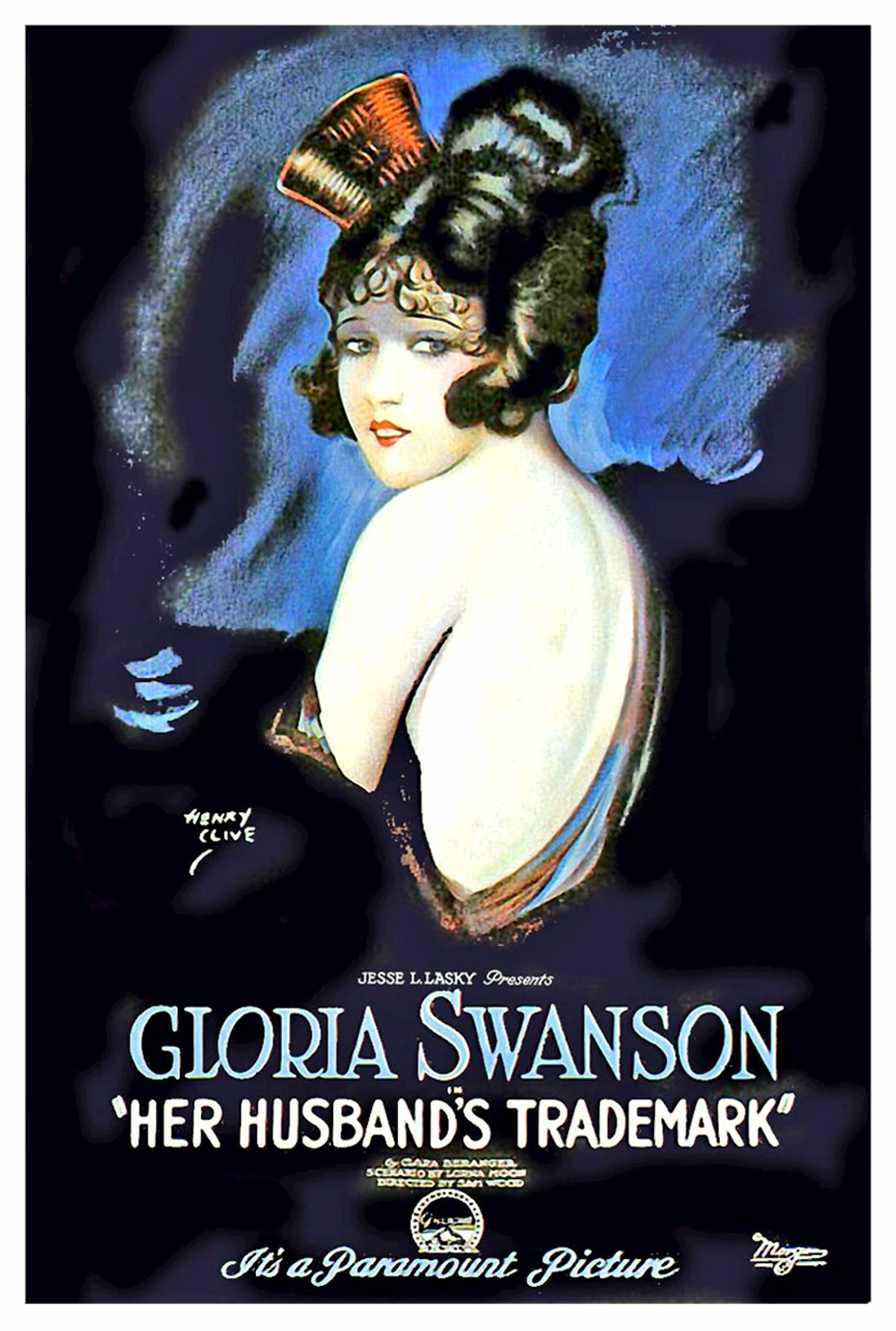
This movie poster promoting "Her Husband's Trademark," is no longer protected by
federal copyright laws and is in the public domain. 


Copyright Law Protect Writers


Many writers understand that “copyright” is not a single, solitary right of ownership but instead there are several kinds of rights that can be sold by the writer to publishers in exchange for payment. Traditionally, selling copyrights has been how fiction writers have made their living.

Examples of copyrights include:


  1. First Rights -  the publisher is given the right by the writer to be the first one to publish his or her work (article, short story, etc.)  in print media or digital publication.
  2. First Electronic Rights -  the publisher is given the right by the writer to be the first one to publish his or her work (article, short story, etc.)  in an electronic publication only. 
  3. First Web Rights - electronic rights are not identical to web rights.  An electronic publication is a form of storage that holds the work in electronic form.  Electronic rights may or may not include web rights (aka Internet rights), which is the right to public the work online.   
  4. All Rights - every copyright that the writer has to his or her work (article, book, etc.).  Once this is transferred, the writer has no further connection with the work because that’s all been transferred to the buyer of the copyrights.  This is the exact opposite of a writer who writes under a work for hire contract.  In a work for hire situation, the writer is considered an employee of the publisher who is paid a fee for the work that he or she does, and all copyrights to that work product is “work made for hire” and the employee has no copyright ownership of it, that belongs to the employer who hired them to do the work.  Work for Hire means "no rights." 


Trademarks Are Different Than Copyrights


Legally, copyrights can be complicated and if writers aren’t careful, they can get manipulated by publishers into selling more than they intended and making less than they should for the work they have created.  It’s a necessary headache for many writers, this need to understand their legal copyright protections.

Added to that burden is the need to know what trademarks are and when writers may need to have trademark protections as well.  Trademark law exists to protect writers from "trademark infringement" just as copyright law protects them from "copyright infringement."

There’s a big difference between copyrights and trademarks.  Both are protected rights under federal law but they aren’t the same thing.   Moreover, it’s harder to get a trademark than a copyright even though there are situations where the trademark may end up even more vital to the writer than protecting their original copyright.  Trademarks, unlike copyrights, are not automatically created under the law for the protection of the creator / writer.

Warning for the Author and Indie Publisher of a Series of Novels 


This is particularly true of writers who decide to avoid the traditional publishing route, opting to publish their own work independently and acting as their own publishing company.  If a romance novelist, for instance, decides to write a series of Scottish Highlander Paranormal Romances and publish them on Amazon for Kindle, then that novelist and indie publisher may well need to consider trademark protections for their new romance series.

Why?  While the stories in each book within their series will have copyright protection, the following may need trademark protection:

  • The Series Title (as a tool being used to market the collection of books);
  • The Name of the Protagonist (if the entire series is dependent upon this one name or character); 
  • The Name of the Setting (if the entire series is dependent upon this locale); and 
  • The Name of the Indie Publishing Company (as a tool being used to market the collection of books).

Trademark Infringement: Consider Fan Fiction 

Federal trademark protection is based in a 1946 federal law known as The Lanham Act (aka the Trademark Act of 1946).  In this cornerstone statute, a trademark in the United States is defined as "… any word, term, name, symbol, or device, or any combination thereof" used in commerce to identify a service or good.

This means that a character’s name; as well as a fictional town where a cozy mystery series is set, for example; or the particular type of alien that appears in a science fiction work,  may be used to “identify” the series and therefore worthy of federal trademark protection.  Legally, there has to be a “distinctive source identifier” between the name, setting, or world-creation that can be shown to connect the readers immediately with the series itself.

This can be a big issue in fan fiction, for instance, where new stories are being written but use of the original work’s characters or setting results in infringement of the author’s trademarks.

The fanfiction writer’s defense?  Fair use doctrine (but this is getting way too complicated for a short blog post).

The bottom line here:  writers who are publishing their stuff  (particularly a series) need to know about trademark infringement and protecting against it just like they need to know about copyrights.  


2/2/15

Copyright Infringement and Breach of Contract: the Tess Gerritsen Lesson

Tess Gerritsen has a couple of very interesting blog posts discussing her fight over what's hers regarding the movie Gravity.  (You may recognize Gerritsen more for her work as the author of the Rizzoli and Isles' mystery / thriller series.)

Read Garritsen's posts here - they are worth your time, Dear Reader:


Author's Breach of Contract Case Dismissed

The federal judge dismissed author Tess Gerritsen's case against Warner Brothers last week, but the dismissal is without prejudice to refiling.  Variety has an overview of what's just happened in the California breach of contract case.

I'm expecting Gerritsen to come back again; she's not writing from a position of defeat here.  She's lost a big battle, but she hasn't lost the war.


Contract Claims vs. Copyright Violations for Writers

Gerritsen sold rights to her story in a written contract.  When she believed that the contract had not been honored, she sued for breach of that contract.

The decision (assuming a new filing) will be based upon how the court reads the provisions of that deal as they jive with state law.  Part of her continued fight will be the legal connections between two corporations and what was transferred between them.

The rights themselves are her legal rights to the work she created.  The United States Copyright Office provides a nice summary.  These are protected by federal copyright law.

Here's something that I want to clarify, Dear Reader, after chattering about what was happening to Tess Gerritsen got a bit confusing in a conversation I had with a friend yesterday.

1.  You don't own a single "copyright" to your work.  There are several rights that make up "copyright law" and when those rights are violated, a federal claim for "copyright infringement" can arise.

2.  You can sell one or more of these rights for money.  That's how writers get published, of course.

Here's one thing I want to make clear to my friend and to you, Dear Reader: what exactly you are selling to the buyer needs to be clearly understood by both parties and made clear in your written agreement.  The contract will cover the rights that are described within it.

Here are some examples of copyrights:

  • First North American Serial Rights (FNASR)
  • First Print Rights
  • First Electronic Rights
  • Exclusive Rights
  • Excerpt Rights
3.  It is possible for someone to take your work and use it after you've made a deal with them (i.e., a written agreement) and be liable to you both for breach of contract (for the rights sold in the agreement) as well as violation of federal copyright laws (for infringing on your rights that were NOT included in the contract).

Much good luck to Tess Gerritsen in her breach of contract fight.  


1/28/15

Pen Names, Pseudonyms, Nom De Plumes, aka DBAs

News this week is that China is forcing its writers to reveal their true identities, despite the fact that writing under a pen name has been a longstanding Chinese tradition. It’s said to be a part of the Chinese government's attempt to control what happens online.

Some may think that outlawing pen names isn’t that big of a deal; they’d be wrong.
.
Charlotte Bronte and her sisters published under pen names using the surname Bell; Charlotte's nom de plume  was Currer Bell.  

Pen Names Give You Power   

Pen names are powerful: they allow writers a level of creative freedom that only anonymity provides. Aside from political freedom, there are several reasons that writers choose to publish under a nom de plume.  For instance:

  • Pseudonyms can be important for professionals (like lawyers) who may not want clients to know that they write steamy romance novels or Louis L’Amour-type westerns. 
  • Also, pen names allow writers established in one field or genre to publish in another area without fear of losing readership. 
  • For prolific authors, using pen names frees them from concern that publishing too many books in one year may dilute their market if they were to publish all under a single name. 

There are lots of reasons to use a pseudonym if you are a writer and pen names are widely used by writers today. How widely used? As for how popular pen names are, I leave it to you to surf the web for all the lists of “famous pen names” both past and present - like the 2013 list that Time Magazine provides in its article, “Famous Authors with Secret Pseudonyms.” 


Writing as a Business

Thing is, when you write under a pen name and you publish that work online with hopes of making a buck or two from it, then you’re going into the writing business. At this point, it’s not just romantic to use a pen name, it’s business. 

Which means you might want to consider filing your pseudonym down at the courthouse as a “DBA” (doing business as). Why?

First, filing your pen name as a DBA provides legal notice to the public that you are using another name to do business which may be important to you in the future for various reasons. It proves that the pen name really is you if you ever need to establish that ownership.

Second, it may help to block someone else trying to use that same pen name - if not globally, then possibly within your county or state. It’s a legal argument that isn’t as strong as copyright law but it’s better than going forward and not having this backup.

After all, establishing your DBA isn’t creating a business entity. It’s just providing legal public notice that you are using a fake name to do business.

Setting Up Your Nom de Plume as a DBA 

Getting a DBA set up is pretty cheap and easy. It’s a service provided in Texas by your local county clerk. Just look up the details online (like these set of instructions for Bexar County or Travis County) or give your County Clerk’s Office a call.

One important caveat: if you are serious enough about your writing business to take the time to register a legal notice of your pen name as a DBA in your public county records, and you’re pretty darn sure that you’re going to be making more than pocket change from your sales, then you may want to consider creating a business entity for yourself.  Writers can register copyright under a corporate name just as they can under their personal legal name.

That’s a decision that may need the help of a lawyer licensed in your state — and you may want to run it past your accountant, too.

Pen Name Fun

Finally, here's a couple of fun links for you, Dear Reader, if you are considering a pen name or are just curious about nom de plumes:

Choose your new author alias here using the online Pen Name Generator.
Go here to take the Oxford Dictionary's Pen Names Quiz.

1/6/14

Public Domain Images: British Library Shares 1,000,000 Free Public Domain Images From Book Illustrations

Recently, the British Library uploaded 1,000,000 public domain images (that's right: 1,000,000) that their hard-working librarians have taken from books published between 1600 and 1900 A.D.

They've all been uploaded to Flickr.

Go to Github to get the manifest.

The images have been collected as part of the British Library's "Mechanical Curator."

Here are a couple of examples:


Note:  You may have some hurdles in getting the image from Flickr to your blog platform.  Hint:  choose to "share" the image in the right sidebar of the Flickr page.  


1/2/14

Cool Public Domain Images: Free Photographs of Golden Age Movie Stars on Wikimedia Commons (Publicity Stills)

Images are becoming more and more important for websites and blogs, given the growing popularity of Pinterest and Google+, among other social media sites.  Finding quality photographs to accompany your words isn't hard to do on the web; however, tracking down great images in the public domain is not as easy.

You want public domain images because they are free to use.  Images (photos, infographics, clip art, etc.) are protected by copyright laws and they are not free for your use in your blog post or on your web page unless the creator has released their copyright, or the copyright protections do not apply for some reason.

For instance, federal government images are not protected by copyright and you are free to use images found at sites like NASA and the CDC.  

Publicity Stills: Another Source of Public Domain Images

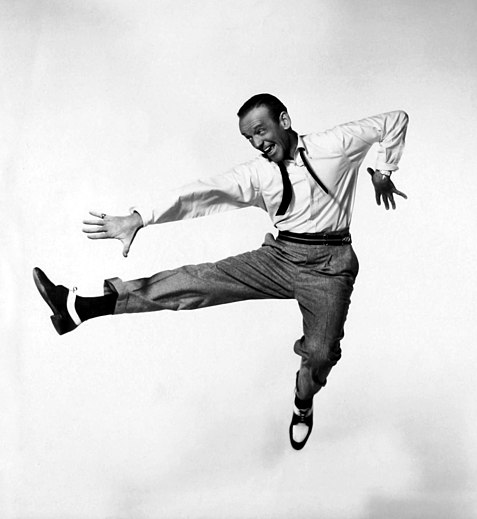
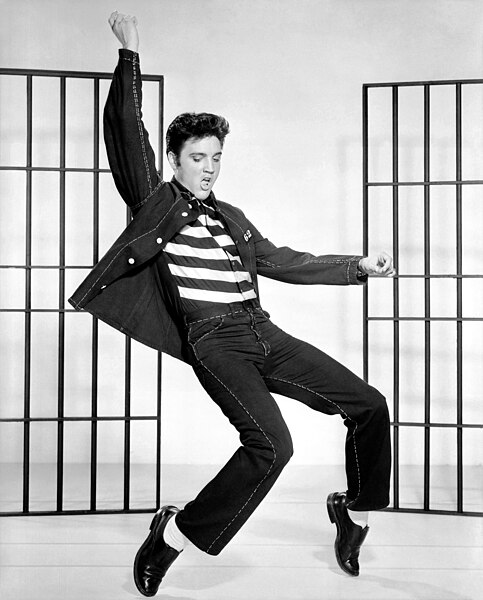
Another great find for public domain images:  publicity stills that are in the public domain.  Like Fred Astaire dancing in promotion of the film "Daddy Long Legs" above, of the image below of Elvis Presley promoting "Jailhouse Rock."

Granted, both of these images are of stars dancing but maybe I'm in a dancing mood this morning - it's the first working day of 2014 and I'm excited about this year!  However, you can find lots of other great photographs to choose from by going to Wikimedia Commons and searching for "film stills"  or "publicity photos."  Lots to choose from - with famous faces and people doing things other than dancing.

These Hollywood Golden Era movie stills are free from copyright protection and in the public domain because they were published in the United States between 1923 and 1963 and any copyright was not renewed.  However, publicity stills by definition are generated for publicity and many, like news releases, are disseminated for widespread use with a release of copyright in order to promote an actor or a movie or a TV show.

You need to check before using newer images, however.  For details on more recent imagery, visit CreativeClearance.  Newer film stills may retain their copyright and you'll need to pay for their use in your publication (and a blog is an online publication).

From Wikimedia Commons:
As explained by Additional source information: This is a publicity photo taken to promote a film actor. As stated by film production expert Eve Light Honathaner in The Complete Film Production Handbook, (Focal Press, 2001 p. 211.):  "Publicity photos (star headshots) have traditionally not been copyrighted. Since they are disseminated to the public, they are generally considered public domain, and therefore clearance by the studio that produced them is not necessary."

10/14/13

Prenda Lawyers: The Zaniness Just Keeps On Coming — But When Are These Guys Going to Get Zapped?

“So, what’s the latest with Prenda?” asked my client, and instead of filling him in on things personally, I thought I’d just post an update here.

First of all, you may remember Prenda (we’ve been following their antics for awhile now). Now, there’s even a nice summary page over at Wikipedia, where the Prenda Law Firm is described as “… a Chicago, Illinois-based law firm that claims it battles copyright piracy, but is also strongly identified with copyright trolling.”

BoingBoing labels them grifters, but whatever.

Prenda, or following what’s happening in courts all over the country delving into Prenda-activities, is just a hoot. Yes, maybe a geeky-lawyer hoot, but a hoot nevertheless.

For the latest, check out Techdirt’s latest (they’ve been doing a great job of tracking Prenda stuff), “Report From The Court Room On Latest Prenda Hearing In Minnesota: Another Hearing, Another Mess,” by Nancy Sims as well as its recap, “Prenda Soap Opera: Steele Contradicts His Own Previous Claims, Lutz Disappears Again... And The Mother-in-Law Surprise.”

For even more, there’s Boing Boing’s article “Porno copyright troll John Steele accused of identity theft -- by his mother-in-law,” which includes a link to their earlier coverage.

A tidbit of things:  Prenda’s Mark Lutz never seems to show up. He’s been a no show in court, he’s failed to come to depositions, and the excuses as to why Lutz isn’t where he’s suppose to be are amazing not only in how long it takes to provide one, but the reasons for his no-show are worthy of a jaw-drop in their own right.

There’s simply too much here to share in a short blog post, but hopefully these links will help you catch up with this infamous Porno Copyright as a Practice Area law firm.


7/29/13

Public Domain Infographics: Where to Find Free and Informative Graphics for Your Web Site or Blog

Infographics are hot these days, and for good reason.  A good infographic ("informative graphic") is more than just an image, a piece of clip art, or a photo: it's a tool that educates, even entertains, the reader.

Infographics are Copyright Protected - Unless They're Not

Thing is: there are lots of infographics out there on the web that are great, but their creators haven't released the copyright to their work.  Use those infographics on your site or blog without the creator's okay (and fee) at your own risk of an infringement claim -- or at the very least, the embarrassment of receiving and having to respond to a cease and desist letter.

Two options for you if you don't want to pay for the design: build your own infographic (it's pretty easy and can be free) or find a public domain infographic on the internet to use.

For how to build your own infographics, check our my earlier post.

Finding Public Domain Infographics

For locating free public domain infographics, think of places on the web where they have no expectation of copyright.  Like .gov sites - the government's infographics aren't protected by copyright and often government sites are publishing infographics in the hope that you will share them with your readers.

Hint:  Go to Google Images and type in a search phrase related to your subject matter, including the word "infographic."  Next, search through the results for infographics appearing on .gov web sites; go to the site itself and confirm that it is an image within the public domain.  Eureka! You've found your public domain infographic.

Another suggestion: sites where the creator has released his or her copyright in order to promote their work.  (Wikimedia Commons is a good place to find public domain images but not so much public domain infographics at this point.)  This may be a graphics design site, or an individual artist's portfolio page.

Here, it may be in the public domain or you may need to credit the infographic to the creator and perhaps provide a link to their site, but they won't be asking you for payment.  The best bet is to find an infographic that fits your needs and email the creator asking if he or she is willing to have you publish their work on your site at no charge if you give them credit / linkage.

For a few public domain infographic sources, check out:

  1. Department of Homeland Security (often provided with news releases)
  2. Centers for Disease Control  (search among the various issues for infographics)
  3. U.S. Census Bureau
  4. NASA
  5. Office of the Governor of your state (often provided with news releases or with blog posts).

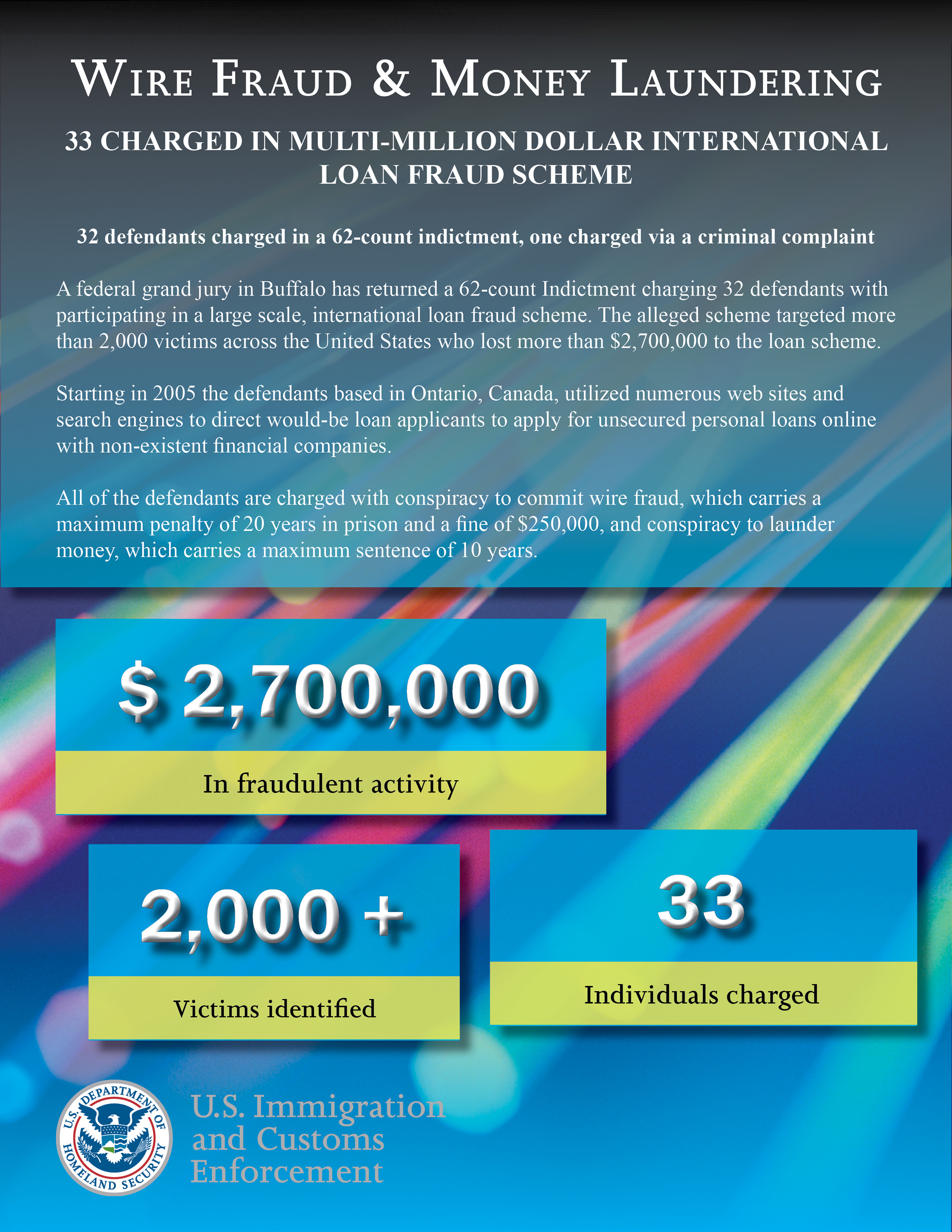
Here is an example of a federal infographic that accompanied news of a Homeland Security financial felony bust in New York where the grand jury came back with indictments:


4/22/13

Quick Prenda Update: Hilarious Article by PopeHat's Ken White.

It's Monday morning and I don't have time to write a long blog post now, but this was in my Feedly today and it's so funny thought I'd share. Started laughing at the "self esteem" edit and it just got better from there: "Angry Prenda is Angry" at TechDirt, article by attorney Ken White who posts at PopeHat. .

4/2/13

Prenda Update: Judge Wright Clears His Docket for the Day, Hearing is Done in 12 Minutes. Wow.

Prenda Law latest:  the Big, Fat hearing that was scheduled in California today ended really quick when everyone and their dog took the Fifth.

The federal judge that had cleared his entire day's docket for this hearing sent them all home after only 12 minutes.

What will Judge Wright do now?  Here in Texas, I think I feel the ground shaking as his frustration and angers builds ....

For details, including predictions on what we'll be reading in Judge Wright's order, check out:

  • TechDirt - 1 (summary)
  • TechDirt - 2 (all the details from a Los Angeles criminal defense attorney who was there, also seen at Popehat)
  • Forbes (main stream media's take on things)

Wonder if these guys know that they're waiting to hear back not only from an angry federal judge but also from a U.S. Marine who served in VietNam and then spent several years as a deputy sheriff?

Take the Fifth with this guy?
Wow, it's like facing off with Raylan Givens or something.


3/25/13

Prenda Law Facing Federal Sanctions as Pirated Porn Copyright Infringement Practice Blows Up in a Big Way

Prenda Law, have you heard about them yet?  After three different clients asked me if I had heard about Prenda Law and was this the same as Righthaven, I thought I'd corral some information here in one post with lots of links to more detailed coverage in various other posts and news coverage.  And there's a court case or two to follow, as well, if you'd like.

Prenda Law: a Law Firm Targeting a Specific Niche

Prenda Law is a boutique law firm based in Chicago that in a manner akin to Righthaven has sought to dig for gold in federal copyright infringement law; however, unlike Righthaven, Prenda Law has much more of a TMZ twist to things.

There's porn involved.

That's right: pornography; specifically, pornography copyright rights.

Seems this group of lawyers got the idea of going after copyright infringement cases by filing federal lawsuits based upon federal copyright laws seeking damages from those defendants who downloaded porn from websites illegally.

Pirated Porn as a practice area.

Initially, the law firm had to file complaints with "John Does" as defendants until they could get federal court subpoenas to obtain names from the Internet Service Providers of their porn-downloading clients.  The Internet companies were asked to open their files, reveal the names associated with specific IP addresses whose download histories showed the computer at that address had grabbed  porn from sites without permission or payment.

The problem is that Prenda Law doesn't seem to have real live clients in all this.  


Prenda Law's clients seem to be lacking substance: what will Judge Wright do?


Federal Judges Not So Happy With Prenda Law's Plan

Defendants and ISPs in these cases didn't set idly by, and things exploded earlier this month when a federal judge set a show cause hearing for sanctions against Prenda Law asking that the defendants show cause why they shouldn't be sanctioned by the federal court for filing sham pleadings.

Elsewhere in the country, two men have challenged Prenda Law so far, alleging that they never gave their permission for their names to be used in these lawsuits and as a result, the law firm has committed identity theft.  In Florida, a Prenda Law case was dismissed by a federal judge after no one could point to lawyer and client in the courtroom (link to that hearing transcript shown below).

(After reading that transcript, am I the only one thinking of Chinatown and "she's my daughter ... she's my sister" here?)

Prenda Law faced off with U.S. District Court Judge Otis Wright in a Los Angeles courtroom earlier this month; it wasn't pretty -- and lots of lawyers all over the country are talking about what happened in that courtroom back on March 11 - and what will happen when that show cause hearing resumes on April 2, 2013.

April 2013 Order to Show Cause - Federal Judge Gets Specific

Here is what Judge Wright has ordered for the April hearing (excerpted from the order as signed by the Judge):

Thus, the Court amends its February 7, 2013 Order to Show Cause (ECF No. 48) to include sanctions against the persons and entities in subparagraphs a–m below:
a) John Steele, of Steele Hansmeier PLLC, Prenda Law, Inc., and/or Livewire Holdings LLC;
b) Paul Hansmeier, of Steele Hansmeier PLLC and/or Livewire Holdings LLC;
c) Paul Duffy, of Prenda Law, Inc.;
d) Angela Van Den Hemel, of Prenda Law, Inc.;
e) Mark Lutz, of Prenda Law, Inc., AF Holdings LLC and/or Ingenuity 13 LLC;
f) Alan Cooper, of AF Holdings LLC;
g) Peter Hansemeier, of 6881 Forensics, LLC;
h) Prenda Law, Inc.;
i) Livewire Holdings LLC;
j) Steele Hansmeier PLLC;
k) AF Holdings LLC;
l) Ingenuity 13 LLC; and
m) 6881 Forensics, LLC.
These persons and entities are ORDERED to appear on March 29, 2013, at 10:30 a.m., TO SHOW CAUSE for the following:
1) Why they should not be sanctioned for their participation, direction, and execution of the acts described in the Court’s February 7, 2013 Order to Show Cause;
2) Why they should not be sanctioned for failing to notify the Court of all parties that have a financial interest in the outcome of litigation;
3) Why they should not be sanctioned for defrauding the Court by misrepresenting the nature and relationship of the individuals and entities in subparagraphs a–m above;
4) Why John Steele and Paul Hansmeier should not be sanctioned for failing to make a pro hac vice appearance before the Court, given their involvement as “senior attorneys” in the cases; and
5) Why the individuals in subparagraphs a–g above should not be sanctioned for contravening the Court’s March 5, 2013 Order (ECF No. 66) and failing to appear on March 11, 2013.
For more: 

  1. read the transcript of an earlier Florida judge dismissing a similar case filed by Prenda Law which we can assume that Judge Wright has read -- and one which TechDirt describes as worthy of a movie script.
  2. read Popehat's continuing summary of events here (Ken of Popehat was present in the California courtroom on March 11). 
  3. read ArsTechnica's continuing coverage of things here: it's good, too.
Image:  Wikimedia Commons, public domain

7/16/12

Are Westlaw and Lexis Violating Lawyer Copyrights By Publishing Legal Briefs and Memoranda In Their Databases? New York Lawsuit Filed for Damages Under U.S. Copyright Law

Well, this seems silly.  As a lawyer, whenever I filed something in the public record of a court case - and I did this for over 20 years - never once did I think WAIT, I better make sure I've protected my copyright on this thing.   I mean really.

However, two lawyers up in New York are suing both West Publishing Company and LexisNexis for having the audacity of taking documents like briefs and legal memoranda, copying them, and placing them on their databases.  That's right.  The lawyers are arguing that they are due actual and punitive damages for a violation of federal copyright laws because West and Lexis have digitally collected and sold these public records to their clients.

Oh my, oh my.

The lawsuit isn't new.  It was filed as White v. West Publishing Company & Reed Elsevier Inc. in the Southern District of New York back on February 22, 2012.  You can read the complaint here.

UCLA Law Professor Eugene Volokh wasted no time in writing about this, and his blog post is worth your time to read.  

From Professor Volokh's perspective, the issue here isn't the existence of a copyright -- he argues that the briefs are copyrighted material of the lawyers who wrote them (or maybe the law firm, or maybe the client, too - but this is a rabbit trail and Prof. V argues work for hire doesn't extend this far) -- it's the question of whether or not the fair use doctrine will apply here to allow the two big legal research companies the ability to share these briefs for their own profit under the fair use defense to copyright infringement under federal law.

Meanwhile, up in Canada there's another case dealing with a similar issue of copyright violation of lawyers whose briefs have been copied and then placed into legal software databases and it's been certified as a class action.  More on that case here.  

Another law professor shares his take on things over at the Law Librarian Blog; it comforted me to read that he thought this to be a little silly, too. 


5/21/12

Copyright Infringement of Recipes: Elizabeth Warren, Pow Wow Chow, and me.


Over the past week, I’ve been reading about Elizabeth Warren, currently a candidate in Massachusetts for the United States Senate and former head of the Consumer Financial Protection Bureau and apparently, NOT an American Indian.

I remember Elizabeth Warren as my law school professor at UT-Austin, long ago: she taught me one-half of the two semester long UCC course. Can’t remember which one.

I do remember visiting with Elizabeth Warren in her office several times; she and I shared the unique (masochistic?) resume builder of driving 3 hours a day to attend law school (me, back and forth from San Antonio to Austin in a refurbished 68 VW Bug; I can’t remember what she drove, but I do remember it was some place with lots of snow in the winter). 

I do not remember any American Indian references then; I have no recollection of tribal artifacts in her small office, nor do I remember anyone at UT thinking of Elizabeth Warren as a “woman of color.”  I thought we were two blonde, blue-eyed women sharing the difficulties of commuting to a top law school while being married and living on a shoestring budget.  She had me beat: she did one year of her commute while pregnant. 

I admired her then.  Now, I wonder how much that young, scared, law student believed was true and what may have been stretched.  Especially after reading the Wikipedia bio.  But I digress. 

Of course, no one really references her time in Austin, because why would they if she moved on to Harvard.  Yeah, I know. 

Somewhere between then and now it seems that Elizabeth Warren acknowledged an American Indian Heritage and with it, apparently, the desire to contribute to an American Indian cookbook entitled “Pow Wow Chow.”

What a name.  I cannot wait for Saturday Night Live on this one. 

Okay, here’s my point.  Elizabeth Warren is being accused of copyright infringement of RECIPES if not downright plagiarism because she submitted several recipes for publication as her own, and which were published in Pow Wow Chow – but seem to have an eerie similarity to some pretty high-falutin’ recipe sources

And by “eerie similarity” I mean they look exactly the same.  But you knew that.

Recipe Copyright Infringement and Plagiarism Claims Are Tricky

There are just so many ways you can cook some things, and the U.S. Copyright Office recognizes this.  You don’t violate a recipe copyright by listing ingredients for a dish, or by itemizing how those ingredients are to be put together and cooked into a finished product. 

You violate a recipe copyright by grabbing up the actual language used in the recipe as your own.  The description, the know-how stuff, that goes into the recipe along with the ingredients list and the amount of time it needs to bake at 350 degrees. 

It’s a hard case to prove, sure.  But recipe copyright infringement claims are real. 
Did Elizabeth Warren infringe on copyrights?  That’s a legal issue but consider this:  she apparently took three recipes verbatim from the New York Times and allowed them to appear as her own, under her byline as a Cherokee, in the Pow Wow Cookbook. 

Read the details here.
 
As for the claim to be an American Indian, I leave the commentary on that infringement to an American Indian, who wrote this open letter to Elizabeth Warren on the blog Polly’s Granddaughter, which I discovered while reading Michael Graham’s piece in the Boston Herald this week.

3/21/12

Cutting and Pasting into Blog Posts: Don't Be Lazy

I have a client that is great about keeping up with her weekly blogging schedule.  She posts twice a week, period.  You can depend on it. 

And that's great.  

What isn't so great, though perfectly understandable, is taking a section of writing from another source (another post, a magazine article, a book) and then cutting and pasting the guts of that writing into a blog post with a brief introduction, "I really liked this [insert name of source material] because it's so on point! It's so true!"

Or something like that.  Why is this bad?  

Well, as my client points out this might (or might not) be within the fair use doctrine and therefore not any kind of copyright infringement and it's clearly not plagiarism because she's giving credit where credit is due (she's not trying to claim the stuff as her own). 

However, substitute the cut and paste for a hyperlink and the post becomes a sentence or two.  Insufficient original word count.

True, it's great to find something that you want to share from a book (or magazine article or blog post) that someone else has written and use it as the basis for a blog post.  There's also the time-saving benefit (as my client pointed out, these types of posts are helpful on days where posts are scheduled and there's a time crunch). 

But what are you really sharing of yourself here?  And, without going into geek-talk (my client hates going down this road), Google will not appreciate these kinds of blog posts.  At all.  

Here's what I think needs to happen.  

I think that when you share something, you need to give your reader more than "lookie."  I think you need to comment and give your opinion on why you are sharing this writing with them.  

If you don't have time for that, then go for a link list ... something like a Top Ten list, ten great sources of inspiration when you're dieting; ten great recipe sites; ten great med mal blogs, whatever.  That's pretty fast blogging and it's giving your reader more of you than one of these "lookie" posts does. 

3/13/12

Pinterest and Copyright Infringement: Beware - By Their Terms of Use, Pinterest Tries to Pass Any Copyright Claims Over to You

Clients, colleagues, my assistant, even the clerk at World Market ... everyone is talking about Pinterest.  Yes, another media site...and you were still getting used to Twitter, right?

Well, don't jump on that Pinterest bandwagon too fast, folks.  I admit that I was invited to join Pinterest in some long-ago email and I accepted the invitation ... but I never used the site.  Just put it on the To Do List, to check out in the future.

Recently, I did check out Pinterest.  And I promptly cancelled my membership.  Why?  I read the March 2011 Terms of Use, which include the following lingo:

You acknowledge and agree that you are solely responsible for all Member Content that you make available through the Site, Application and Services. Accordingly, you represent and warrant that: (i) you either are the sole and exclusive owner of all Member Content that you make available through the Site, Application and Services or you have all rights, licenses, consents and releases that are necessary to grant to Cold Brew Labs the rights in such Member Content, as contemplated under these Terms; and (ii) neither the Member Content nor your posting, uploading, publication, submission or transmittal of the Member Content or Cold Brew Labs’ use of the Member Content (or any portion thereof) on, through or by means of the Site, Application and the Services will infringe, misappropriate or violate a third party’s patent, copyright, trademark, trade secret, moral rights or other proprietary or intellectual property rights, or rights of publicity or privacy, or result in the violation of any applicable law or regulation. ...

You agree to defend, indemnify, and hold Cold Brew Labs, its officers, directors, employees and agents, harmless from and against any claims, liabilities, damages, losses, and expenses, including, without limitation, reasonable legal and accounting fees, arising out of or in any way connected with (i) your access to or use of the Site, Application, Services or Site Content, (ii) your Member Content, or (iii) your violation of these Terms.

Now, from what I understand, the reason to use Pinterest is to grab images from various websites and "pin" them on your Pinterest page to share with others.  Different from bookmarking them, or Stumbling them and not the same as OneNoting them.

There are copyrights floating around in there, and I'm not going to mess with it.

Plus, reading these terms of use, I think it sounds like Pinterest understands that there are infringement issues swimming through its service stream and I don't like the idea that instead of respecting rights they've opted for passing the buck on any claims (or at least trying to do so).

I'm not the only one concerned about what's going on here.  Check out here and here.  

Yuck.  Life's too short ... and I'm busy enough without making time for Pinterest.  You read the Terms of Use, you check out the service, and make your own decision.  

2/24/12

Using Media Content on Your Blog or Web Site: First, Just Ask Permission.

You want to use content from a news article or television station's web site in your blog post - this could cover many things.  For lawyers, news coverage about big victories in the courtroom usually means a desire to place that coverage on their bio page at the law firm's web site.  The 21st Century's version of an Ego Wall.

However, as I've discussed here before on more than one occasion, if a lawyer pulls that story or that video and puts it on the firm's website willy-nilly, then copyright infringement may occur.  Those media stories (including photos and videos and audio interviews) are all the copyrighted work of these media outlets and should be respected.

What to do?  First things first, just ask.  Call or email the media source (this is really easy if you have the contact information of the reporter who just did your interview) and ask permission.  Alternatively, surf their site for words like "reprint" or "permission" and you will find things like this:

San Antonio Express News
Dallas Morning News
Houston Chronicle
The Associated Press.

Will you have to pay?  Maybe.  It's called a "licensing fee."  Balance that cost against dealing with a cease and desist letter (if you get one, Righthaven never bothered) or a claim for copyright infringement by the media's IP litigators.