Showing posts with label public domain. Show all posts

11/24/17

Cool Public Domain Image: Cloud to Ground Lightning in Las Cruces, New Mexico


Lightning3


From Wikimedia Commons:

This image or file is a work of a U.S. Air Force Airman or employee, taken or made as part of that person's official duties. As a work of the U.S. federal government, the image or file is in the public domain in the United States.

11/13/17

Cool Public Domain Image: Louis "Satchmo" Armstrong

Louis Armstrong restored

Photo of Louis "Satchmo" Armstrong, Jazz Trumpeter

This is an image uploaded to Wikipedia from the United States Library of Congress's Prints and Photographs division under the digital ID cph.3c27236.

It is considered one of Wikipedia's "Featured Pictures," as one of the finest images shared on the site.

Public Domain Image: Gift to the Library of Congress


From the Library of Congress:

  • Title: [Louis Armstrong, head-and-shoulders portrait, facing left, playing trumpet]
  • Date Created/Published: 1953.
  • Medium: 1 photographic print : gelatin silver.
  • Reproduction Number: LC-USZ62-127236 (b&w film copy neg.)
  • Rights Advisory: No copyright restriction known. Staff photographer reproduction rights transferred to Library of Congress through Instrument of Gift.
  • Call Number: NYWTS - BIOG--Armstrong, Louis "Satchmo"--Orchestra Leader [item] [P&P]
  • Repository: Library of Congress Prints and Photographs Division Washington, D.C. 20540 USA http://hdl.loc.gov/loc.pnp/pp.print
.

10/23/17

Cool Public Domain Image: Carnival Ride

This photograph is from the Library of Congress. It is found it the John Margolies Roadside America Photograph Archive and has been released into the public domain. 


Disco Star Ride at Seaside Heights, New Jersey


As for using this image, details from the LOC:

Publication and other forms of distribution: John Margolies made the photographs in the John Margolies Roadside America Photograph Archive. The Library of Congress purchased the intellectual property rights for the photographs with the archive and, therefore, there are no known copyright restrictions on the photographs. Privacy and publicity rights may apply. Photographs of sculpture or other works of art may be restricted by the copyright of the sculptor or artist.

Access: Subject to P&P policy on serving originals. Digital images are used in preference to the original slides, which are kept in cold storage for preservation purposes.

Reproduction (photocopying, hand-held camera copying, photoduplication and other forms of copying allowed by "fair use"): Subject to P&P policy on copying, which prohibits photocopying of the original color photographs.

Credit Line: Library of Congress, Prints & Photographs Division, photograph by John Margolies, [reproduction number, e.g., LC-MA05-1]


10/7/17

Free Public Domain Image: Earth From Space

I'm hoping to start sharing public domain images here each week that are interesting and from a variety of sources.  This image is one of the "featured pictures" from Wikimedia Commons.

The Earth Seen From Apollo 17


It's an example of a great photo that is available for free from Wikimedia Commons.  You are free to use it because it is in the public domain, as explained on the site:

"This file is in the public domain in the United States because it was solely created by NASA. NASA copyright policy states that "NASA material is not protected by copyright unless noted....
"This work is in the public domain because it was published in the United States between 1923 and 1977 and without a copyright notice. Unless its author has been dead for several years, it is copyrighted in jurisdictions that do not apply the rule of the shorter term for US works, such as Canada (50 p.m.a.), Mainland China (50 p.m.a., not Hong Kong or Macao), Germany (70 p.m.a.), Mexico (100 p.m.a.), Switzerland (70 p.m.a.), and other countries with individual treaties."

The Earth seen from Apollo 17

10/8/16

Free Public Domain Images: The New York Public Library

Looking for free public domain images for your blog or ebook?  I have a series of posts dedicated to that treasure hunt (check here).


How to Find Free Public Domain Images at NYPL Site


Today, I'm sharing the resource provided by the New York Public Library at their website.  Here's what you do:

1.  go to their site;
2.  enter your search into the white search box in the top right-hand corner -- but don't click it;
3.  click that little tab and you will get the option to search "only public domain."
4.  if you don't choose that option, never fear.  You can also narrow your search to public domain images by clicking in the left sidebar of your search results.

Not For Everyone - But Great for Some


Now, caveat:  these images aren't for everyone and every subject.  If you're a lawyer writing a blog dedicated to death penalty issues (like I co-author with Terry Lenamon), then this isn't a great find.

However, other niche blogs may find some great stuff.

And ebook covers?  There's some really interesting images here to consider.  For those who might want to find public domain images for uploading into Canva, for instance.  (See my post on using Canva for your covers here.)
.

I found the above image in just a few seconds at the NYPL site.  I like it.  Thurston was amazing, right? 


6/21/16

Benjamin Franklin's Daily Routine: What Good Will You Do Today?

There's much to be discovered in how to live a productive life, making the most of your day, in Benjamin Franklin's Autobiography.  

You can read it here at Gutenberg.org (or download it in several different formats, including Kindle).

It's in the public domain.

1.  Benjamin Franklin's Morning Prayer

.
First off, Ben Franklin prayed.  Franklin wrote (p. 148):

And conceiving God to be the fountain of wisdom, I thought it right and necessary to solicit his assistance for obtaining it; to this end I formed the following little prayer, which was prefix'd to my tables of examination, for daily use.

"O powerful Goodness! bountiful Father! merciful Guide! increase in me that wisdom which discovers my truest interest! strengthen my resolutions to perform what that wisdom dictates. Accept my kind offices to thy other children as the only return in my power for thy continual favors to me."

I used also sometimes a little prayer which I took from Thomson's
Poems, viz.:

          "Father of light and life, thou Good Supreme!
          O teach me what is good; teach me Thyself!
          Save me from folly, vanity, and vice,
          From every low pursuit; and fill my soul
          With knowledge, conscious peace, and virtue pure;
          Sacred, substantial, never-fading bliss!"

2. Benjamin Franklin's Daily Routine or "Scheme"


You can find the daily routine he created for himself on page 148 as well.  Here it is (click on the image once to see a larger and easier-to-read version):


I love this "scheme."  I like how he wrote his own prayer to start the day, and how his question to himself is "what good shall I do this day?"

What good shall I do today?  What good are you going to accomplish today?

10/5/15

Fair Use and Copyright Infringement: The 2015 Dancing Baby Case and You, Dear Reader

There’s been lots of discussion about a recent Fair Use case that has come down from the United States Court of Appeals for the Ninth Circuit, Lenz v. Universal Music Corp., No. 13-16106 (9th Cir. Sept. 14, 2015).  Forbes, for example, lets its readers know that from this new court opinion, “[i]f a copyright holder ignores or neglects our unequivocal holding that it must consider fair use before sending a takedown notification, it is liable for damages.”
.

Here’s what you need to know, Dear Reader, regarding “fair use” and “copyright infringement” now that the Dancing Baby Case opinion has been published.

.
.

The Dancing Baby YouTube Video: Mommy Files a Lawsuit


Maybe you’ve heard of the "Dancing Baby Case."  Long ago, on February 7, 2007, Stephanie Lenz  sat down at her computer.  She went to the YouTube website and uploaded a 29-second personal video she had made of her two little kids dancing in the kitchen to Prince’s song, “Let’s Go Crazy.”  She shared the video on YouTube with anyone that wanted to see it.  

She named the video of her babies dancing in the kitchen, “Let’s Go Crazy.” In the video, early on, she asks her toddler son “what do think of the music?” and he responds by bouncing up and down.  

Meanwhile, over at Universal, a man named Sean Johnson had the full-time job of monitoring videos that were uploaded to YouTube for copyright infringement of Universal’s artists.  Among Universal’s artists was Prince, and it was Universal’s job to enforce and protect Prince’s song copyrights.

Sean Johnson was Universal’s man on the scene; employed an assistant in their legal department who every day went to the YouTube website to search for uploads of Prince’s music.  If that search came back with search results for a Prince song, then he would watch the video on YouTube.  

He made the initial call on whether or not the video "embodied a Prince composition" by making “significant use of . . . the composition, specifically if the song was recognizable, was in a significant portion of the video or was the focus of the  video."  If he found something objectionable, he would share it with others at Universal.  Universal would then notify YouTube that the video should be taken down as a copyright violation if Universal believed the “composition was the focus.”

In the Universal review process, Stephanie Lenz’s home video of her kids dancing in the kitchen to a Prince song was considered to meet their criteria. YouTube was notified by Universal to take the Dancing Baby Video down.  YouTube did.

Result?  Mommy Stephanie Lenz filed suit under the Digital Millennium Copyright Act ("DMCA") section 17 U.S.C. § 512(f), arguing that Universal misrepresented in its takedown notification that her 29-second video was an infringing use of Prince’s work. 

What the Lenz case holds:

“Her claim boils down to a question of whether copyright holders have been abusing the extrajudicial takedown procedures provided for in the DMCA by declining to first evaluate whether the content qualifies as fair use. We hold that the statute requires copyright holders to consider fair use before sending a takedown notification, and that failure to do so raises a triable issue as to whether the copyright holder formed a subjective good faith belief that the use was not authorized by law. We affirm the denial of the parties' cross-motions for summary judgment.”

The Dancing Baby Case and You, Dear Reader


It’s an important case for you, Dear Reader, no matter which side of the copyright you’re on:   whether you are a writer, photographer, or designer trying to protect your copyright, or you are a blogger or ebook author who wants to use an excerpt or image that may be protected by copyright law.  

Here are some things for you to know:

Lenz Is Not the End of the Road on Fair Use


1.  This is a recent federal appeals court decision in a fight that lasted 7 years.  It’s a big deal.  

The only higher court than a federal appeals court is the United States Supreme Court.  Whether or not this case will be appealed to the High Court is one question (actually, a petition for writ would be filed).  

First, they may request a full  hearing of all the justices in the Ninth Circuit in what’s called a “motion for rehearing en banc.”  If the motion is filed and it’s granted, the whole case gets reconsidered by all the justices on the Ninth Circuit, not just the ones that were assigned to hear the case and who issued this opinion.  

Even if the losing party in this case wants SCOTUS to review the Ninth Circuit decision, and can do so after the rehearing motion, odds are not in their favor.  First, SCOTUS only agrees to hear a handful of cases that request review.  Second, a review is no guarantee that things would go their way; they could lose again.  

My point:  this opinion isn't quite jelled yet, it could change.  Lawyers know that the odds aren't high that a rehearing is going to change things (if it were granted), so many read the current opinion as speaking for the Ninth Circuit.  And the odds are even more remote that SCOTUS is going to change things, and even if it did, this opinion will be good law in the Ninth Circuit until it does.  

So, Lenz is probably going to become finalized law ... unless it's not after additional review.  There is a remote chance that this fight isn't over.  


2.  This is a decision out of the Ninth Circuit.  There are several regions, or circuits, in the United States.  Texas, for instance, sits in the Fifth Circuit.  

Each federal court of appeals in each federal circuit has the independent authority of reviewing cases that come before it within its jurisdiction.  These independent reviews may or may not agree, or jive.  In fact, controversies and opposite rulings in different federal circuits are often the reason that SCOTUS does grant writ and take review: to make the final call when two or more circuits don’t agree on the answer to a legal question or issue.

My point:  Lenz may or may not be final law for the Ninth Circuit (yet).  Once it’s final, it may be considered as a respected federal court decision by everyone in this country.  But it’s not the end of the road on this issue.  If a similar case were to be heard before the Fifth Circuit, for instance, would that court answer in the same way?  We don’t know.   It’s possible for a similar case to be heard in another circuit (YOUR circuit) and that circuit rule opposite from the Ninth Circuit in Lenz.  

Lenz Doesn’t Answer Every Question on Fair Use


3.  Another point.  Lenz is not a case with clear cut answers for everyone.  Within Lenz, issues are left unclear and not every question is answered.  Lots of lawyers are chatting with each other about what all Lenz will mean in future copyright infringement cases.  For instance:


  • Is “fair use” a particular type of affirmative defense or is it not an affirmative defense at all?
  • What exactly does this mean for those companies that sent out those robotic, automated takedown requests in bulk? 
  • If someone wants to send a takedown notice, then they have to consider fair use — but Lenz explains the “…copyright holder’s consideration of fair use need not be searching or intensive.”  So, how does a copyright holder establish in evidence that they considered fair use before they send their notice?  Is simply saying “I considered the fair use doctrine in this situation and determined it didn’t apply” going to be enough? 


4.  What we do know from Lenz (this isn’t an exhaustive list):


  • If you are going to send someone a takedown request under Section 512(c), then you have to consider Fair Use;
  • Deciding if something is a knowing misrepresentation is done by a subjective (not objective) standard;
  • No damages are available for “impairment of … speech rights” but nominal damages are available to plaintiffs suing under Section 512.


The Dancing Baby Case and You


What does this mean to you, Dear Reader?  

Well, we have a federal appeals court decision on the books now that helps people who want to argue they have a fair use right to use someone else’s work without it being copyright infringement.  It should make humans check the work of their robots before they automatically demand a takedown. 

Given the current state of web publication (including social media), there’s a lot of grabbing of content and images (ESPECIALLY IMAGES) and this case helps those people.  The people using the stuff.  Arguably.  

But Lenz is muddy water.  So, while the Dancing Baby Case is getting lots of attention (and kudos to the Electronic Frontier Foundation (EFF) for all their hard work here), this case isn’t something that provides an easy guide to the people out there who own copyrights or those who want to use stuff they find on the web that is copyrighted.  

The reality remains that there’s a lot of copyright infringement going on right now, and at the same time, there’s a lot of bullying of nice and decent people who have a fair use right to use an image or other work.  There are good guys and bad guys on both sides of the issue:  using stuff fairly and infringing on copyrights wrongfully.  

And Universal was challenged for not considering "fair use" before sending YouTube that takedown notice.  But if Universal had stated, "we considered fair use and found it lacking here," then would they have met Lenz's standard?  

Will Lenz really work to block bullies from blocking fair use through manipulation of DCMA takedown notices?  

Bottom line:  You need to ask a lawyer if you have a question in your particular circumstance.  Copyright infringement and fair use remain complicated legal issues, and Lenz does NOT make things clear.   

For more, read:

Big, Confusing Mess Of A Fair Use Decision Over DMCA Takedowns at Techdirt.


1/7/14

Public Domain Images: The Getty Trust Provides over 40,000 Public Domain Images in its Open Content Program

The Getty Trust and the Getty Research Institute have been building the Getty's Open Content Program, where more and more images are being provided to us all as public domain images digitized and published online.

Here are two examples from their release:


Belisaruis by Baron François-Pascal-Simon Gérard 


President Lincoln, United States Headquarters, Army of the Potomac, near Antietam


From one of their announcements:
Imagine being able to pore over a sketchbook by Jacques-Louis David in minute detail, to investigate Mayan, Aztec, and Zapotec ruins in Mexico, or to study the costumes and social mores at Versailles. All of these things are possible with today’s addition to the Open Content Program, which includes 5,400 artwork images from the collections of the Getty Research Institute—bringing the total number of available images to over 10,000.
These high-resolution images span centuries and continents, and include artists’ sketchbooks, drawings and watercolors, rare prints from the 16th through the 18th century, 19th-century architectural drawings of cultural landmarks, and early photographs of the Middle East and Asia. Over the coming months, we’ll supplement these images with other material critical to the study of art history, including artists’ books and letters, stockbooks of famous art dealers, documentary photographs of art and monuments in situ from around the world, important historical treatises, and archives of famous artists, photographers, and collectors.

They do ask that you respect their wishes, detailed here, which include the following:

Attribution to the Getty

Please use the following source credit when reproducing an image:  Digital image courtesy of the Getty's Open Content Program.

1/6/14

Public Domain Images: British Library Shares 1,000,000 Free Public Domain Images From Book Illustrations

Recently, the British Library uploaded 1,000,000 public domain images (that's right: 1,000,000) that their hard-working librarians have taken from books published between 1600 and 1900 A.D.

They've all been uploaded to Flickr.

Go to Github to get the manifest.

The images have been collected as part of the British Library's "Mechanical Curator."

Here are a couple of examples:


Note:  You may have some hurdles in getting the image from Flickr to your blog platform.  Hint:  choose to "share" the image in the right sidebar of the Flickr page.  


1/2/14

Cool Public Domain Images: Free Photographs of Golden Age Movie Stars on Wikimedia Commons (Publicity Stills)

Images are becoming more and more important for websites and blogs, given the growing popularity of Pinterest and Google+, among other social media sites.  Finding quality photographs to accompany your words isn't hard to do on the web; however, tracking down great images in the public domain is not as easy.

You want public domain images because they are free to use.  Images (photos, infographics, clip art, etc.) are protected by copyright laws and they are not free for your use in your blog post or on your web page unless the creator has released their copyright, or the copyright protections do not apply for some reason.

For instance, federal government images are not protected by copyright and you are free to use images found at sites like NASA and the CDC.  

Publicity Stills: Another Source of Public Domain Images

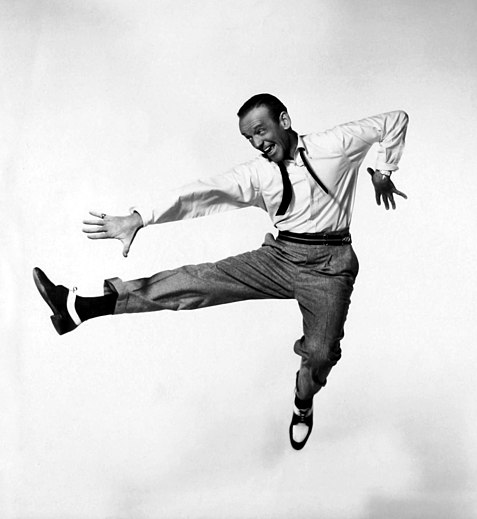
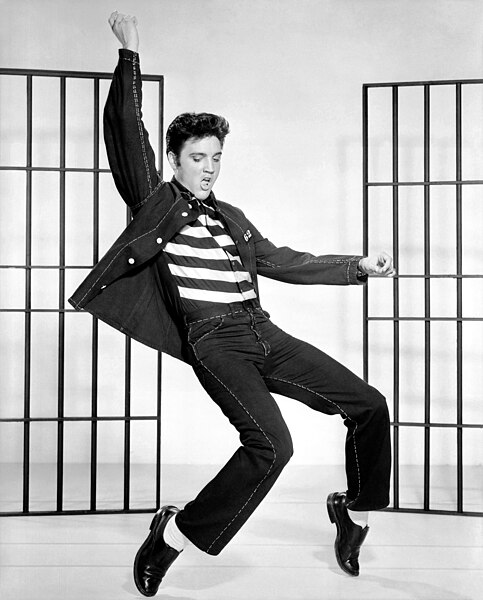
Another great find for public domain images:  publicity stills that are in the public domain.  Like Fred Astaire dancing in promotion of the film "Daddy Long Legs" above, of the image below of Elvis Presley promoting "Jailhouse Rock."

Granted, both of these images are of stars dancing but maybe I'm in a dancing mood this morning - it's the first working day of 2014 and I'm excited about this year!  However, you can find lots of other great photographs to choose from by going to Wikimedia Commons and searching for "film stills"  or "publicity photos."  Lots to choose from - with famous faces and people doing things other than dancing.

These Hollywood Golden Era movie stills are free from copyright protection and in the public domain because they were published in the United States between 1923 and 1963 and any copyright was not renewed.  However, publicity stills by definition are generated for publicity and many, like news releases, are disseminated for widespread use with a release of copyright in order to promote an actor or a movie or a TV show.

You need to check before using newer images, however.  For details on more recent imagery, visit CreativeClearance.  Newer film stills may retain their copyright and you'll need to pay for their use in your publication (and a blog is an online publication).

From Wikimedia Commons:
As explained by Additional source information: This is a publicity photo taken to promote a film actor. As stated by film production expert Eve Light Honathaner in The Complete Film Production Handbook, (Focal Press, 2001 p. 211.):  "Publicity photos (star headshots) have traditionally not been copyrighted. Since they are disseminated to the public, they are generally considered public domain, and therefore clearance by the studio that produced them is not necessary."

7/29/13

Public Domain Infographics: Where to Find Free and Informative Graphics for Your Web Site or Blog

Infographics are hot these days, and for good reason.  A good infographic ("informative graphic") is more than just an image, a piece of clip art, or a photo: it's a tool that educates, even entertains, the reader.

Infographics are Copyright Protected - Unless They're Not

Thing is: there are lots of infographics out there on the web that are great, but their creators haven't released the copyright to their work.  Use those infographics on your site or blog without the creator's okay (and fee) at your own risk of an infringement claim -- or at the very least, the embarrassment of receiving and having to respond to a cease and desist letter.

Two options for you if you don't want to pay for the design: build your own infographic (it's pretty easy and can be free) or find a public domain infographic on the internet to use.

For how to build your own infographics, check our my earlier post.

Finding Public Domain Infographics

For locating free public domain infographics, think of places on the web where they have no expectation of copyright.  Like .gov sites - the government's infographics aren't protected by copyright and often government sites are publishing infographics in the hope that you will share them with your readers.

Hint:  Go to Google Images and type in a search phrase related to your subject matter, including the word "infographic."  Next, search through the results for infographics appearing on .gov web sites; go to the site itself and confirm that it is an image within the public domain.  Eureka! You've found your public domain infographic.

Another suggestion: sites where the creator has released his or her copyright in order to promote their work.  (Wikimedia Commons is a good place to find public domain images but not so much public domain infographics at this point.)  This may be a graphics design site, or an individual artist's portfolio page.

Here, it may be in the public domain or you may need to credit the infographic to the creator and perhaps provide a link to their site, but they won't be asking you for payment.  The best bet is to find an infographic that fits your needs and email the creator asking if he or she is willing to have you publish their work on your site at no charge if you give them credit / linkage.

For a few public domain infographic sources, check out:

  1. Department of Homeland Security (often provided with news releases)
  2. Centers for Disease Control  (search among the various issues for infographics)
  3. U.S. Census Bureau
  4. NASA
  5. Office of the Governor of your state (often provided with news releases or with blog posts).

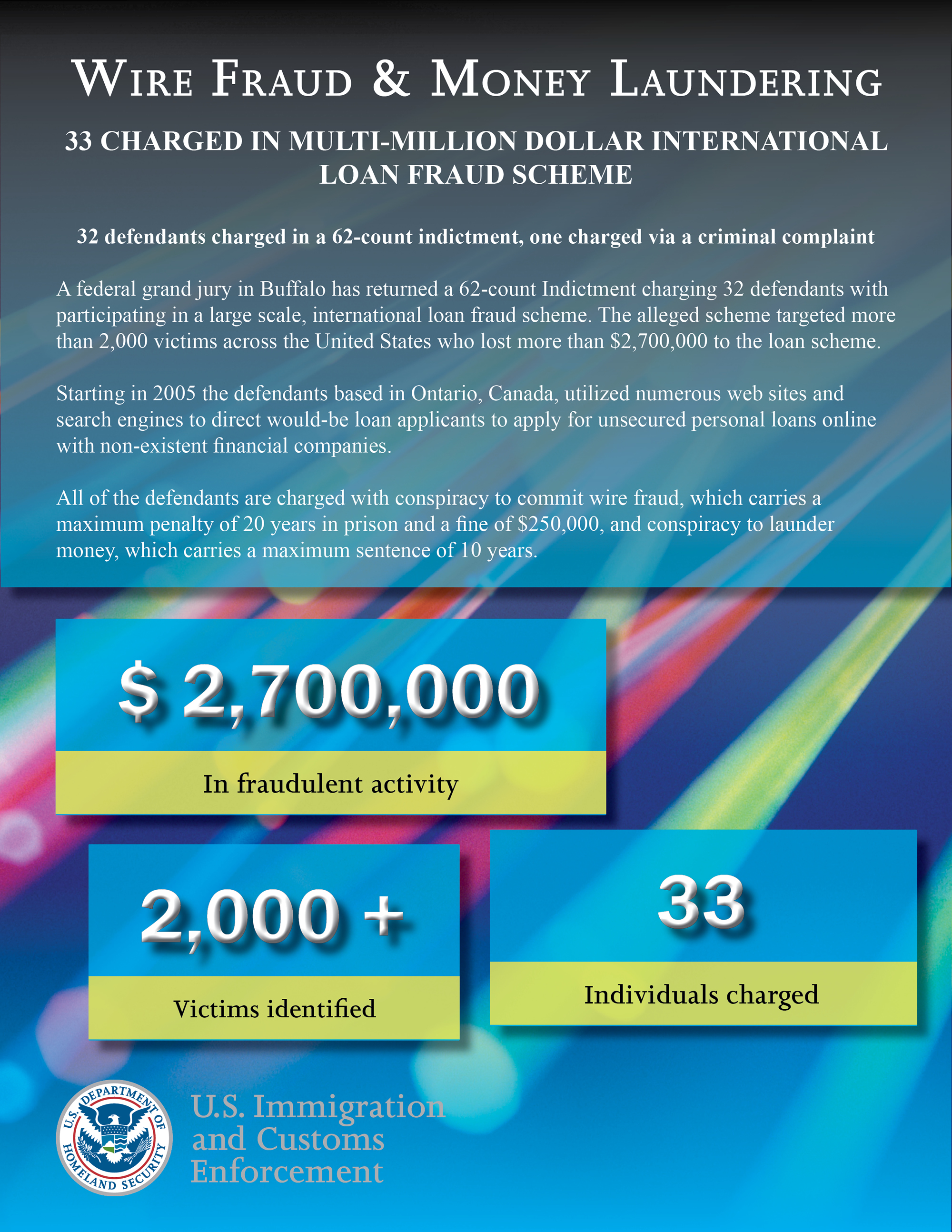
Here is an example of a federal infographic that accompanied news of a Homeland Security financial felony bust in New York where the grand jury came back with indictments:


2/24/12

Using Media Content on Your Blog or Web Site: First, Just Ask Permission.

You want to use content from a news article or television station's web site in your blog post - this could cover many things.  For lawyers, news coverage about big victories in the courtroom usually means a desire to place that coverage on their bio page at the law firm's web site.  The 21st Century's version of an Ego Wall.

However, as I've discussed here before on more than one occasion, if a lawyer pulls that story or that video and puts it on the firm's website willy-nilly, then copyright infringement may occur.  Those media stories (including photos and videos and audio interviews) are all the copyrighted work of these media outlets and should be respected.

What to do?  First things first, just ask.  Call or email the media source (this is really easy if you have the contact information of the reporter who just did your interview) and ask permission.  Alternatively, surf their site for words like "reprint" or "permission" and you will find things like this:

San Antonio Express News
Dallas Morning News
Houston Chronicle
The Associated Press.

Will you have to pay?  Maybe.  It's called a "licensing fee."  Balance that cost against dealing with a cease and desist letter (if you get one, Righthaven never bothered) or a claim for copyright infringement by the media's IP litigators. 

2/15/12

U.S. Supreme Court Throws Public Domain Under the Bus: Copyrights Can Be Applied to Longstanding Public Domain Works Under Berne Convention

In the often-confusing area of copyright, there was one bright line: works that had entered the public domain.  Find an image or a quote within the public domain and you never got to the question of copyright:  are you infringing?  is your work fair use?  It was black and white, night and day: once a work entered the public domain, there were no copyrights to respect - the copyrights had evaporated, and the works were free for anyone to use at any time.  Sweet. 

Until now, because that bright line just got fuzzy.  The United States Supreme Court has just ruled that Congress can take works in the public domain and slap them with a copyright.  Again.  This is true even if the work has been floating around in the public domain for years and years. 

Golan v Holder

Read the full opinion in Cause No. 10-545 before the United States Supreme Court, Golan et al v. Holder, -- U.S. -- (2012) here.  It's a six to two decision; Ginsburg writes for the majority; Breyer and Alito dissent; Kagan recused herself. 

Berne Convention Implementation Act of 1988

Why?  Seems the High Court believes that the United States of America must comply with a trade agreement entered into at The Convention for the Protection of Literary and Artistic Works, and signed at Berne, Switzerland on September 9, 1886.  You can read that treaty online here. 

That's because Congress already passed a federal law (the Berne Convention Implementation Act of 1988), stating that the United States must comply with "all acts, protocols, and revisions" of the  Berne Convention.  The Uruguay Round Agreements Act of 1984 amends 17 U.S.C. 104A, 109(b), and adds chapter 11 to title 17 and section 2319(a) to title 18. 

If you check the deal that is known as "the Berne Convention,"  you will find an agreement (treaty) between several nations around the world, copyrights are to be respected as long as a copyright legally exists in any of the countries that are signatories to the Berne Convention.

Read the list of countries that have signed the Berne Convention here.  Right now, there are 165 nations participating in the treaty.   

Which means that work you may have used legally on your blog - say, an excerpt from something written by Tolkein - may no longer be free for your use as public domain and now, subject to copyright.  


10/25/10

How to Find Free Photos and Images for Your Blog: Searching the Public Domain

Images: photos, clip art, comics – you want them for your blog post. Images make the site more visually appealing, and you’ve learned that photos sometimes help get you higher in Google search results.  However, the creator of that photo or image may want compensation for use of their work. Maybe a little, maybe a lot.


And, you either can't or don’t want to pay for photos that you place on your blog.  Other than creating your own images or photos, is there a free and fast alternative?  Yes.

You just need to learn about “public domain.” On the web, lots of people freely release their copyright in order to expose their talent and their work as widely as possible. Anything -- content, software, images, fonts, videos, etc. -- in the public domain may be used freely by anyone without contacting or gaining the permission of the originator.

What is the Public Domain?

The U.S. Copyright Office defines "public domain" as a work "...no longer under copyright protection or if it failed to meet the requirements for copyright protection." The public domain also includes works where the creator has freely released the work into the public domain. All types of creative work exist in the public domain.

Tips on How to Find Photos and Images in the Public Domain – Free and Fast

1. Basic web searching for the phrase "public domain" along with various words or phrases that you are seeking is an easy enough way to find free images and content on the web.

For example, say you were looking for an image of Abraham Lincoln. Google "public domain image Abraham Lincoln" and you'll find a great photo of President Lincoln that the Library of Congress has been kind enough to upload for public use.

2. Wikipedia also provides an online list of links with oodles of free, public domain images -- a list that is continually growing. It is an excellent resource. (One of my favorites is Wikimedia Commons.)

3. Recently, the nonprofit organization Creative Commons (CC) announced the release of its Public Domain Mark (PDM). Through the use of a CC Public Domain Mark, photographers, graphic artists, and others can help others find their work via the use of a PDM -- see the mark, know that you're free to access the image. Surf the web for “PDM” to find photos, images, and other available works that may not be otherwise categorized as available in the public domain.