1/2/14

Cool Public Domain Images: Free Photographs of Golden Age Movie Stars on Wikimedia Commons (Publicity Stills)

Images are becoming more and more important for websites and blogs, given the growing popularity of Pinterest and Google+, among other social media sites.  Finding quality photographs to accompany your words isn't hard to do on the web; however, tracking down great images in the public domain is not as easy.

You want public domain images because they are free to use.  Images (photos, infographics, clip art, etc.) are protected by copyright laws and they are not free for your use in your blog post or on your web page unless the creator has released their copyright, or the copyright protections do not apply for some reason.

For instance, federal government images are not protected by copyright and you are free to use images found at sites like NASA and the CDC.  

Publicity Stills: Another Source of Public Domain Images

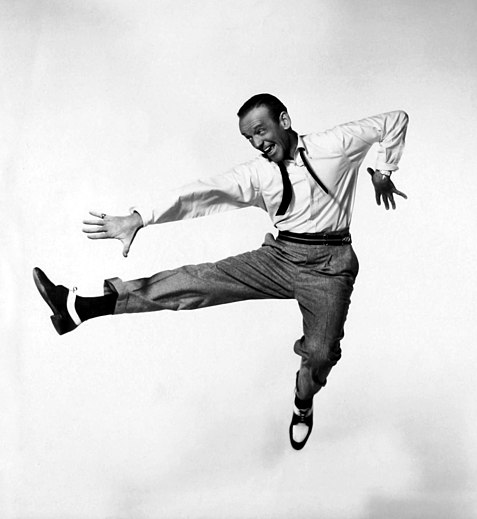
Another great find for public domain images:  publicity stills that are in the public domain.  Like Fred Astaire dancing in promotion of the film "Daddy Long Legs" above, of the image below of Elvis Presley promoting "Jailhouse Rock."
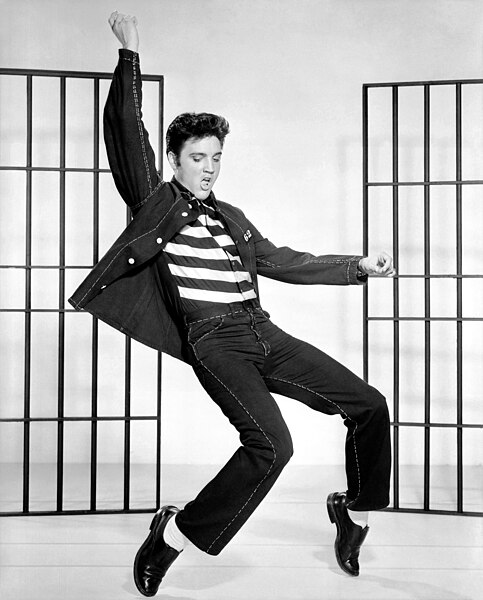
Granted, both of these images are of stars dancing but maybe I'm in a dancing mood this morning - it's the first working day of 2014 and I'm excited about this year!  However, you can find lots of other great photographs to choose from by going to Wikimedia Commons and searching for "film stills"  or "publicity photos."  Lots to choose from - with famous faces and people doing things other than dancing.

These Hollywood Golden Era movie stills are free from copyright protection and in the public domain because they were published in the United States between 1923 and 1963 and any copyright was not renewed.  However, publicity stills by definition are generated for publicity and many, like news releases, are disseminated for widespread use with a release of copyright in order to promote an actor or a movie or a TV show.

You need to check before using newer images, however.  For details on more recent imagery, visit CreativeClearance.  Newer film stills may retain their copyright and you'll need to pay for their use in your publication (and a blog is an online publication).

From Wikimedia Commons:
As explained by Additional source information: This is a publicity photo taken to promote a film actor. As stated by film production expert Eve Light Honathaner in The Complete Film Production Handbook, (Focal Press, 2001 p. 211.):  "Publicity photos (star headshots) have traditionally not been copyrighted. Since they are disseminated to the public, they are generally considered public domain, and therefore clearance by the studio that produced them is not necessary."

1/1/14

Google+ : One Very Big Reason Why Bloggers Should Use Google Plus

Google Plus is getting more and more traffic and more and more users … and while lots of my clients tell me that they don’t have time, and don’t see the need, to get involved in social media, it’s important to remember that Google+ is not the same as other forms of social media out there.

Lawyers blogging on the web, as well as other bloggers, may not have time for Twitter or the desire to be personally involved on Facebook (or trust Facebook, for that matter), and these are valid concerns. 

However, in 2014, it’s going to be good for anyone committing time and money to blogging to become involved on Google+. 

Which means, even if you ignore Twitter and LinkedIn and Facebook and Pinterest and all the other social sites out there, you might want to consider Google+ as being worth your time investment.

Why Is GooglePlus important for Bloggers? 

Report Finds Google+ Plus Ones Second Only to Page Authority in Getting Ranking in Google Search Results


If you want to be in the top search results in Google’s Search Engine, and most everyone does since Google is the dominant search site (overwhelmingly so over competitors like Bing, Ask, and Yahoo), then Google+ can help you.

Here’s how: when content is mentioned in Google+, those in the know are reporting that Google Search Results will rank those GooglePlus mentions higher in the search results than the original content source site. Content is mentioned in Google+ via “plus ones”— this is where a Google+ post (and remember GooglePlus is a blog post really, see my earlier post on this here) placed upon GooglePlus and published there in a Google+ profile entry is then “liked” via some other GooglePlus member (or you, because you can +1 your own fine self).

Moz.com has studied Google search results, and has found that +1s (plus ones) on GooglePlus are very (VERY) high in getting content to the top in Google Search Results. 

In fact, Moz.com found that Google Plus Ones are the SECOND MOST IMPORTANT FACTOR in how a site is ranked in Google Search. Only page authority has more power. Here’s an excerpt from Moz.com’s chart showing how Google+ impacts Google Search Results:

GooglePlus. moz.com, seo
Screenshot of the Moz.com 2013 Report  

To review the entire 120 leading search marketers' expert opinions on over 80 ranking factors, combined by Moz.com into their 2013 Correlation Study, click on the image above.  

Want to place an invitation to "plus one" your blog content in Google Plus on your blog?  Here are the instructions from Google's Developers for placing a PlusOne button on your site.  


Happy 2014